
Why Do Sighthounds Sleep So Much?
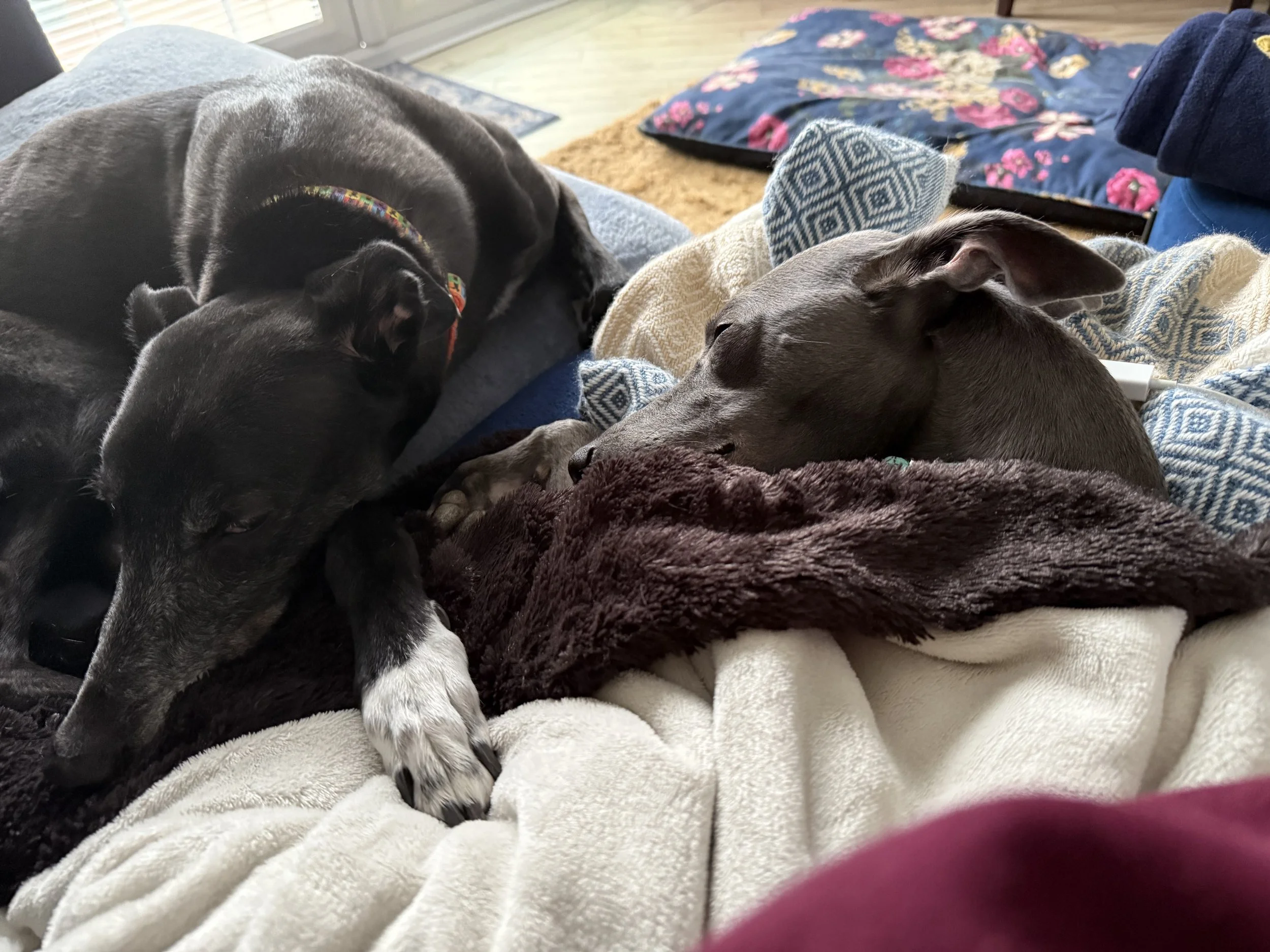
Why do greyhounds sleep so much?
Sleep Startle in Ex-Racing Greyhounds Explained
With The Sleep Vet, Dr Lauren Davis
Sleep comes up in so many sighthound conversations I have, especially with ex-racing greyhounds who are adjusting to home life.
People often ask:
• how much sleep should my sighthound be getting
• why does my greyhound experience sleep startle
• why does my sighthound sleep with their eyes open
• how can I help my newly adopted sighthound sleep through the night
In a recent Facebook Live, I was joined by Dr Lauren Davis, The Sleep Vet, and Sarah from Barkshire Dog Training, to explore what is actually going on when our dogs sleep, and why ex-racing greyhounds can be particularly prone to sleep startle.
This blog brings together the key points, with a special focus on sighthounds and newly adopted ex-racing greyhounds.
What is sleep in our dogs?
Sleep looks different across species, yet scientists broadly agree that sleep has three key features:
• the body regulates it and tries to get enough overall (Need an early night after a late one, or feeling fully refreshed this is why)
• you can wake reasonably easily (not like a coma)
• there is a recognisable sleep posture
For dogs, that usually means lying down with eyes closed.
Sighthounds, however, often sleep in unusual positions and may sleep with their eyes partly open.
That last part becomes important when we talk about sleep startle.
The four stages of sleep
(and what each one looks like)
Lauren explained that dogs move through four main stages of sleep. From the outside, these stages can look very similar.
N1 – drifting off
• the transition from awake to asleep
• muscles soften
• very easy to wake
N2 – light sleep
• the brain preparing for deeper work
• heart rate and breathing settle
• can look exactly like resting
N3 – deep sleep
• heavy, restorative sleep
• physical repair takes place
• neurotransmitters used during the day are cleared and recycled
REM – dream sleep
• brain-focused emotional processing
• twitching, small noises, sometimes tail movement
• after a stressful or exciting day, dogs may spend more time here
This emotional processing helps with resilience the following day.
The block of flats analogy
(also true for humans)
Lauren described sleep like building and moving through a block of flats:
• foundations first (N1)
• then light sleep (N2)
• then deeper sleep on the higher floors (N3 and REM)
Once built, dogs wander up and down between floors during that bout of sleep. When the bout ends (often 20–40 minutes), the block collapses and the next one starts.
If a dog keeps being disturbed, the block repeatedly falls down before they reach the higher floors. They may sleep for hours but still wake feeling tired or irritable. Humans experience this too. We’ve all had nights where we’ve slept, but not well.
How much sleep do dogs need?
Healthy adult dogs generally need around 12–14 hours of sleep or rest in 24 hours.
Puppies and older dogs may need 18–20 hours in a day.
Dogs are polyphasic sleepers, which means they do not sleep in one long block like most humans. They need good-quality daytime rest as well as overnight sleep, particularly in the afternoon.
A dog who sleeps at night but never truly switches off during the day can still be overtired.
Why do sighthounds and ex-racing greyhounds sleep so much?
We talk about rest requirement rather than sleep requirement, because true sleep can only be measured in research settings that would no longer be considered ethical.
Sighthounds are bred for short, intense bursts of sprinting followed by long periods of recovery. Ex-racing greyhounds also come from kennel environments that reinforce this pattern. They rest quietly, then get up for set periods.
So while their basic sleep needs are similar to other dogs, their rest requirement is often higher. They genuinely benefit from long, quiet downtime.
Many newly adopted ex-racing greyhounds spend long periods in a very relaxed resting state that looks exactly like sleep. This is one of the times sleep startle can happen.
A few things that can contribute to sleep startle
Sleep startle is when a dog reacts suddenly when disturbed from sleep or deep rest.
1. The sensory gate in the brain
Sensory information such as touch, sound and movement is routed through the thalamus. Wrapped around it is a structure called the thalamic reticular nucleus (TRN).
The TRN produces tiny bursts of activity called sleep spindles, which act as a filter, blocking out everyday background sensations so the dog can stay asleep.
If a dog is already stressed or sleep-deprived, this filtering is less effective, allowing smaller stimuli to break through. This can then mean they can wake more easily therefore become more sleep-deprived which can then contribute to feeling more stressed. Not a good cycle.
2. Sleeping with eyes open
Many sighthounds sleep with their eyes partly open. They also have a much wider field of vision than humans.
This means movement nearby can trigger waking, even if nobody touches them.
3. The fast reaction system wakes first
The part of the brain responsible for quick reactions and threat detection can wake before the thinking part of the brain.
The dog may react first, then become fully awake moments later, which is why they can appear briefly confused.
This combination explains why sleep startle is seen so commonly in newly adopted ex-racing greyhounds.
Why newly adopted ex-racers are especially prone
In kennel environments, dogs are used to resting without people close by.
Home life is very different. Suddenly there are:
• household noises
• conversations
• kettles and doors
• people moving close to where they sleep
Even in a calm, loving home, the brain can stay more alert because everything is new. This lighter sleep increases the chance of startle in the early weeks.
The “budget hotel” effect
Lauren compared this to sleeping:
• in your own bed
• at a familiar relative’s house
• or in a budget hotel next to a noisy road
You may have experienced this yourself. Even if it is a luxury hotel sleeping somewhere different means you can be more alert, and your brain doesn’t switch off in the same way.
Newly adopted ex-racers are in that hotel phase: new sounds, new smells, new routines and new people.
Sleep, pain and behaviour
During deep sleep, the brain clears neurotransmitters involved in pain signalling. If sleep is repeatedly disturbed, the underlying pain may be the same, but the dog experiences it as more intense.
Many of us will recognise this in ourselves when we’re tired or uncomfortable and suddenly much less tolerant.
Lack of REM sleep also reduces emotional resilience. Both people and dogs may become:
• quicker to feel stressed
• less tolerant
• more easily overwhelmed
Overtired puppies and sighthounds may show behaviour that looks challenging simply because they are exhausted.
Practical ways to support better sighthound sleep
Protect daytime rest
• provide a quiet space away from busy areas
• use a bedroom, comfy bed or a crate if it’s been positively trained.
• reduce interruptions
If your dog follows you everywhere, they may not be getting the deeper sleep they need.
Choose the right sleeping place
• consider foot traffic
• kitchens are social but noisy
• visual barriers can help some dogs
• others prefer to see the room
Surfaces and slipping
• non-slip mats or yoga mats around beds improve confidence
• especially helpful for dogs new to home flooring
Routine, light and sound
• gentle, predictable bedtime routines
• avoid heavy exercise just before bed
• calm enrichment or sniffing before settling
• natural daylight in the morning
• dimming lights in the evenings
• low-level radio or white noise for some dogs
Let sleeping dogs lie
Avoid waking a sleeping dog unless you really have to.
If you must wake them:
• start with your voice
• say their name calmly from a distance
• wait for them to lift their head or focus
• avoid going near them, touching them or leaning over them avoid sudden movements.
Beds and comfort
(why this matters for sleep)
Lauren has a background in human healthcare mattresses, particularly around comfort and pressure relief. She brings this experience into her dog bed design, focusing on:
• joint support
• pressure relief
• walk-on, walk-off height
• non-slip bases
• sizing based on dog length
Supportive, accessible beds can make a meaningful difference to sleep quality, especially for dogs adjusting to home surfaces. These are Laurens beds - Vet Relieve.
Bringing it together
As humans, we talk about sleep all the time.
“How did you sleep?”
“I’m okay, just a bit tired.”
“I feel great I slept so well”
We are often very aware of the impact it has on us.
Sleep is a really important part of your dog’s wellbeing too. When we understand what good rest looks like for them, we can set both ourselves and our dogs up for success.
Want to watch the full conversation?
If you’d like to watch the full chat with Dr Lauren Davis and Sarah from Barkshire Dog Training, you can find the replay here: Live replay.
If you are living with a newly adopted ex-racing greyhound and would like support with sleep startle, settling or confidence, you’re very welcome to get in touch.
I work exclusively with sighthounds, specialising in ex-racing greyhounds.
Get in touch options here.